E-DIGNA
Digital education for analytical browsing — national research + 5 interactive tools.
- Astro 5
- Tailwind 4
- TypeScript
- i18n es/en
- Vitest
- Applied research
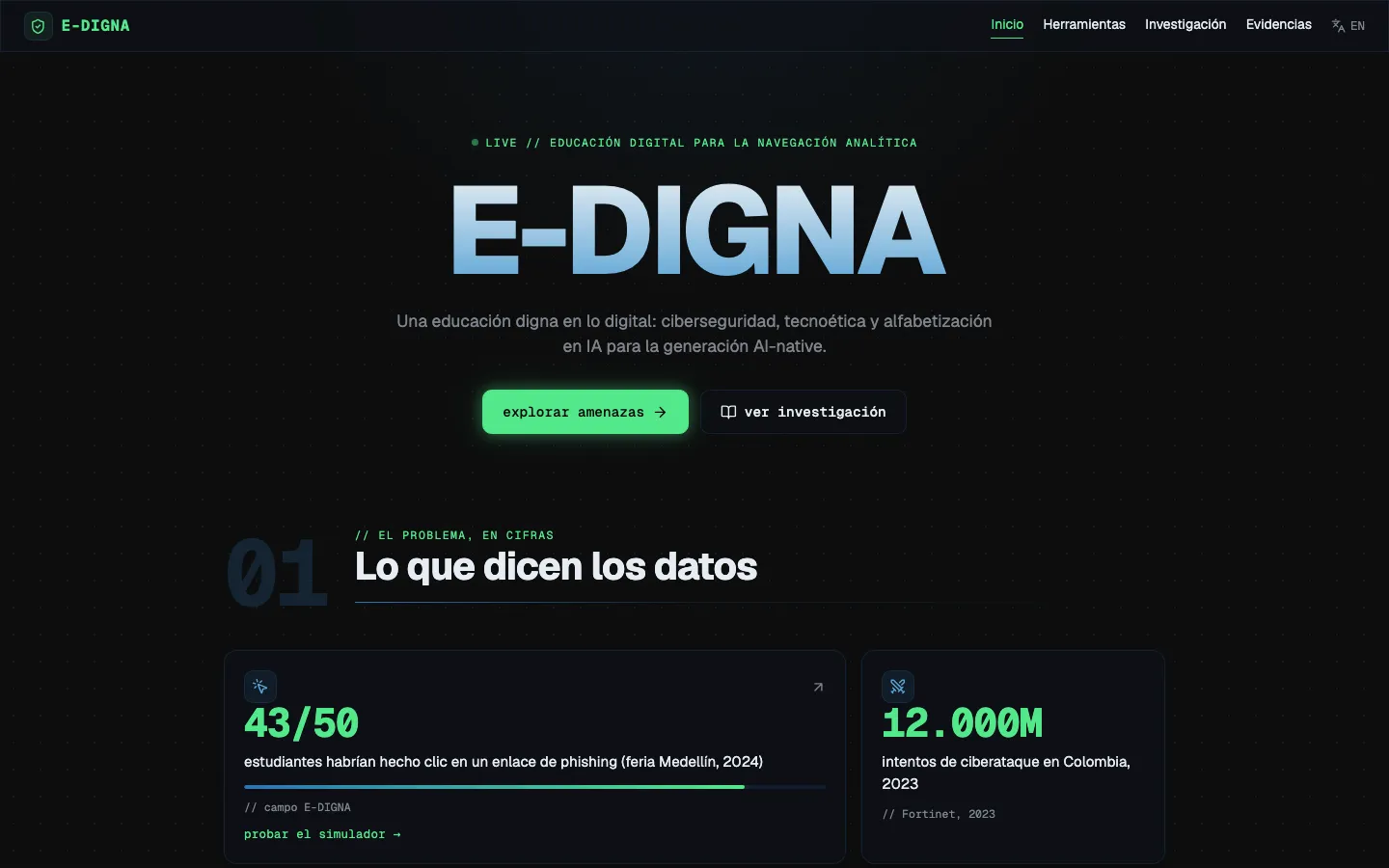
E-DIGNA pairs national-level research on digital culture with five interactive educational tools, live and private by design.
// The problem
Students with high technical skill but low critical awareness — at a 2024 fair in Medellín, only 8 of 50 students could confidently spot a fraudulent email; 43 of 50 admitted they would have clicked.
// Decisions
-
Decision
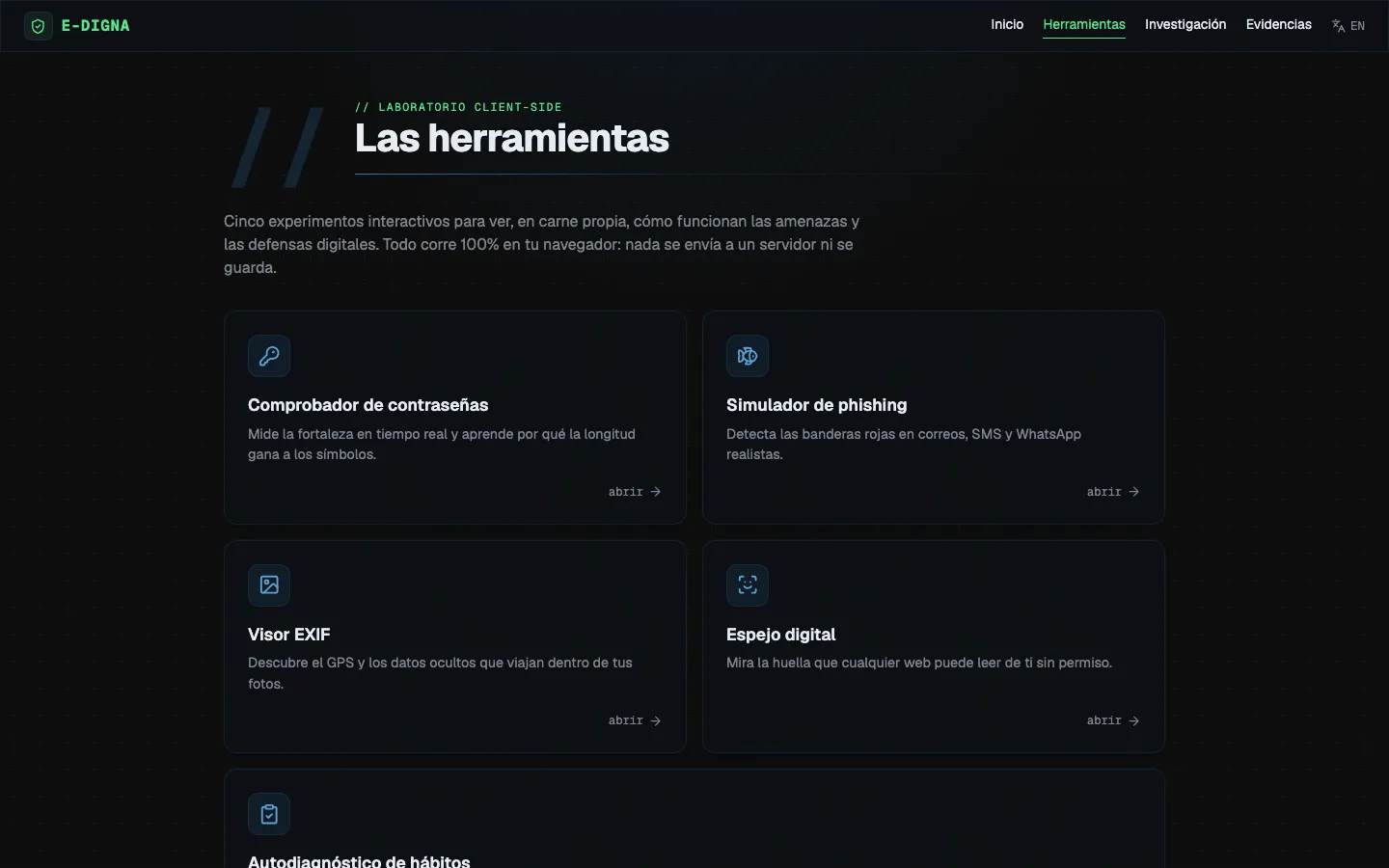
5 tools running 100% client-side — zero backend, zero cookies, zero analytics, zero third-party calls.
Impact
A site that teaches security practices what it preaches — privacy by design you can verify by opening DevTools.
-
Decision
Micro-video-style guides with local neural narration (Piper) — 40 pre-generated es/en audios served same-origin.
Impact
Awareness that shows instead of tells, accessible and with no third-party dependency (or cost).
-
Decision
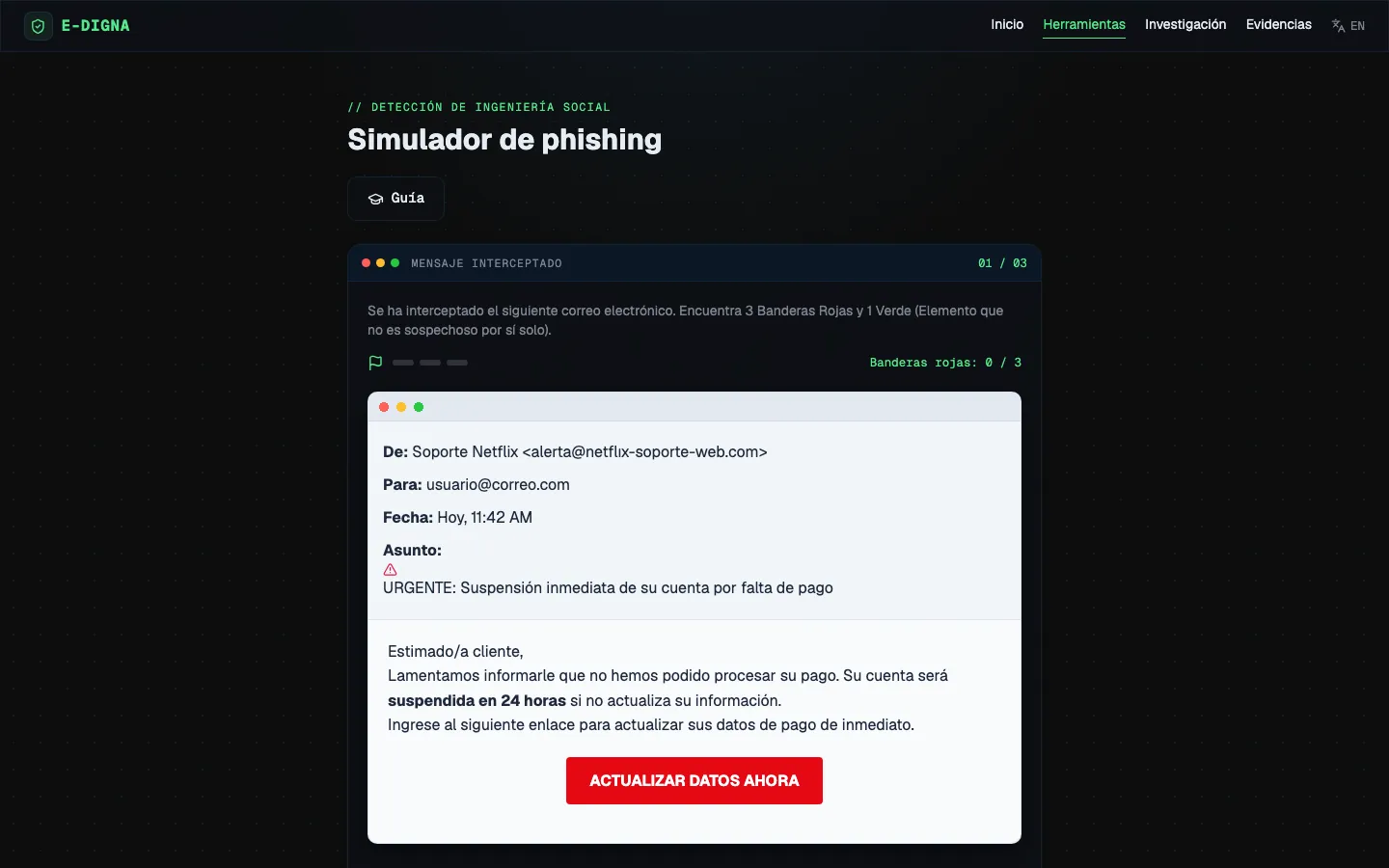
The phishing simulator trains exactly the measured gap — checking where a link points before clicking.
Impact
The abstract threat becomes concrete practice; 43/50 is the number to bring down.
// Results
- Live
- edigna.perezdalejo.com · bilingual es/en · WCAG AA
- Product
- 26 pages · 5 tools · 23 green tests
- Privacy
- 0 cookies · 0 tracking · 0 backend
- Networks
- REDCOLSI · Lasallian Norandina Network · 2026 article
// The product