ImportCol
Logistics, inventory and cost-proration for a Colombian importer.
- FastAPI
- PostgreSQL
- SQLAlchemy
- React 19
- TypeScript
- Tailwind
- Docker
- Caddy
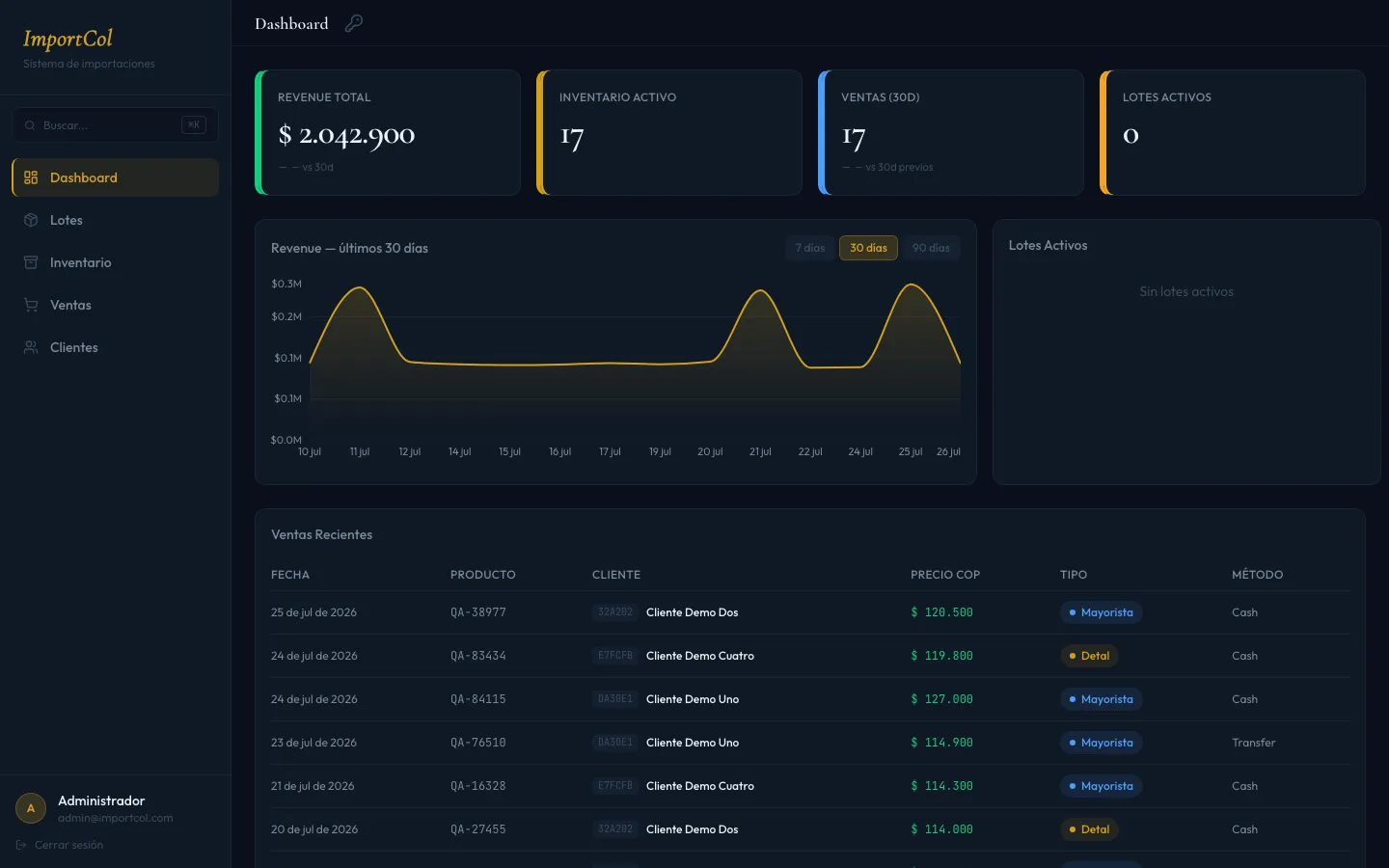
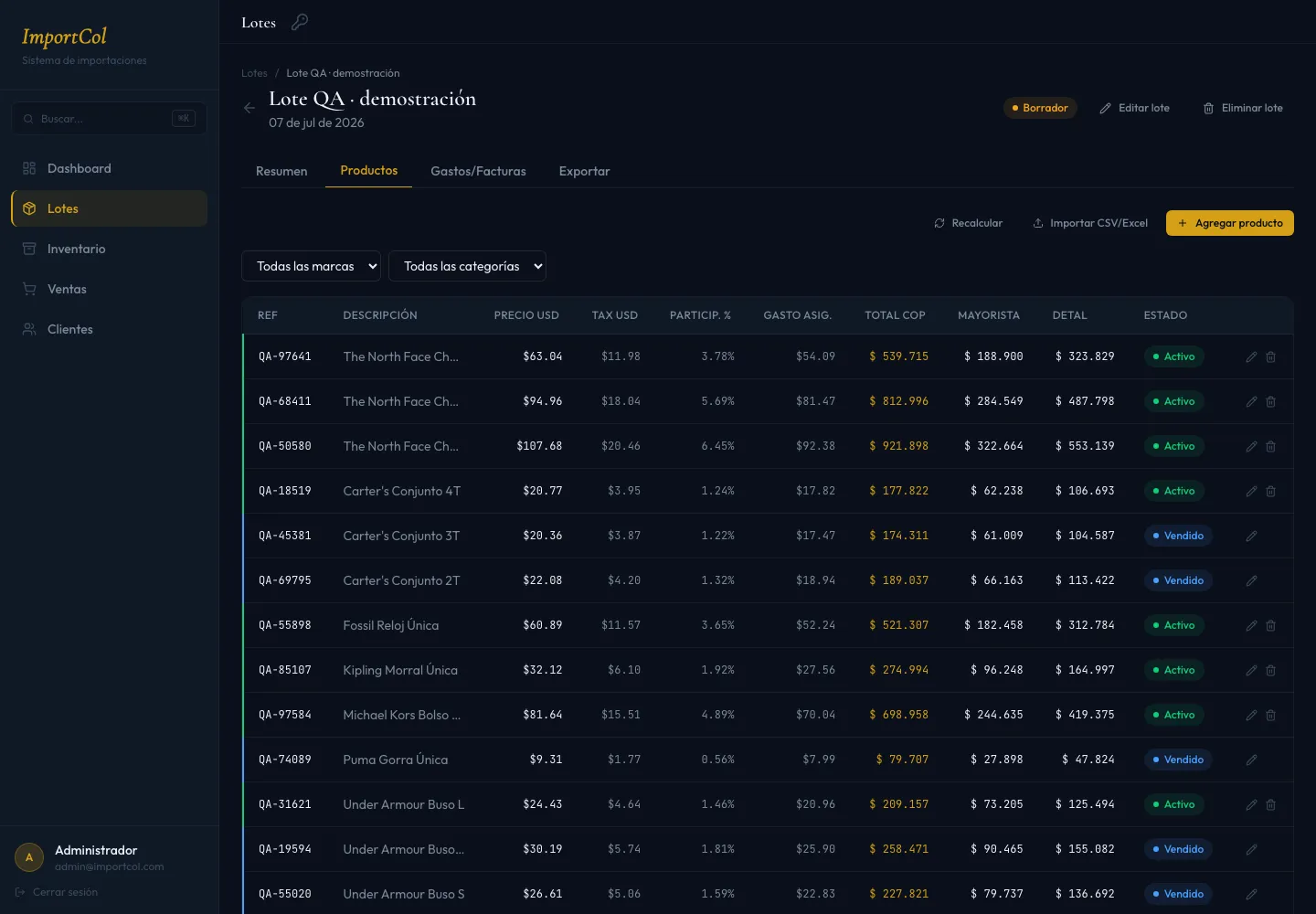
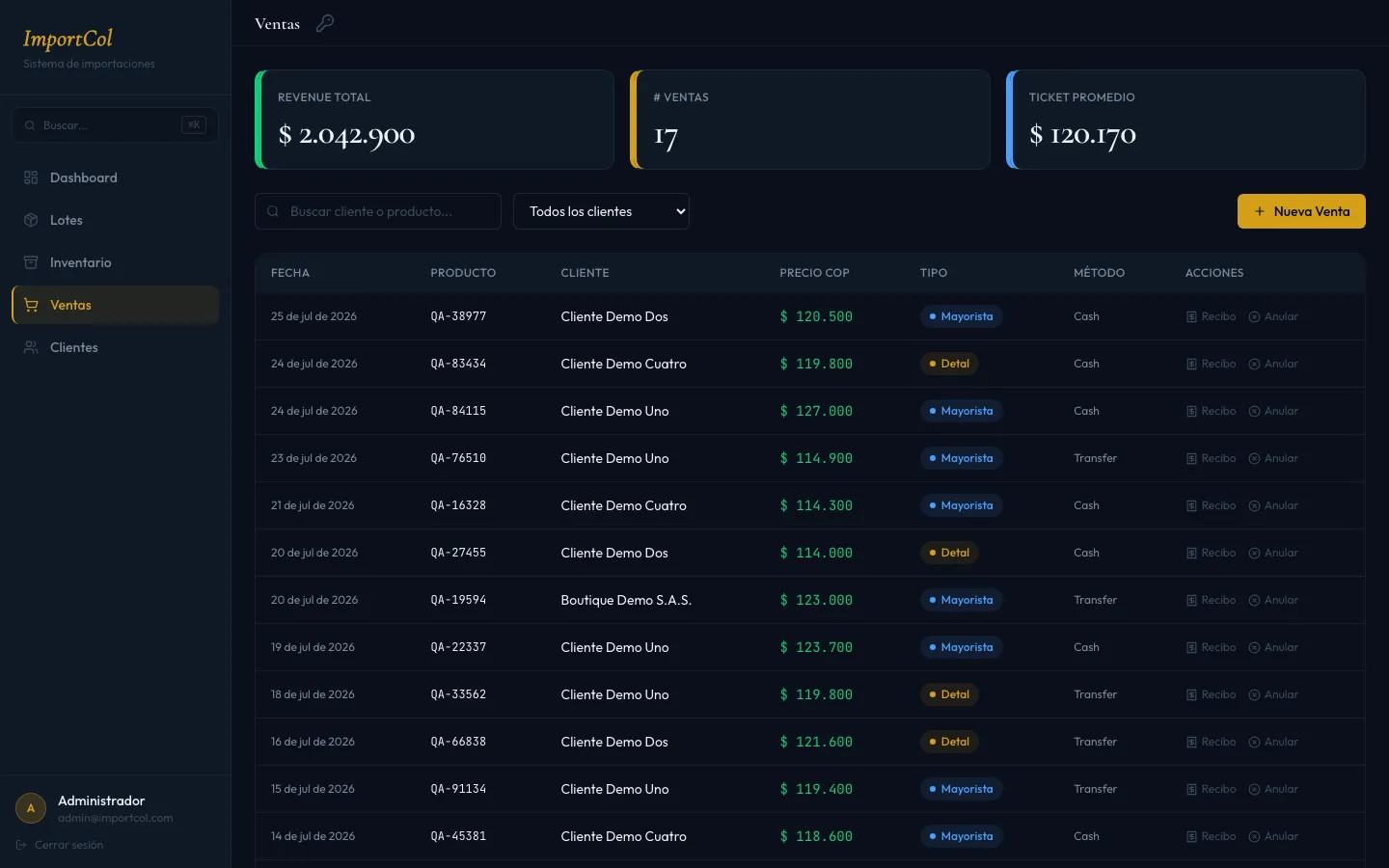
ImportCol replaces an Excel workbook with a production inventory and cost-proration platform in daily use by the client.
// The problem
An importer tracked inventory, batches and cost proration in a fragile Excel workbook, prone to pricing errors that cost real money.
// Decisions
-
Decision
Deterministic proration engine with Decimal and a frozen per-batch denominator.
Impact
Exact costs and suggested prices; parity verified against the reference Excel.
-
Decision
Voiding a sale doesn't delete the row; it flags it and sends the product to "returned", not "available". Selling it again requires an explicit restock.
Impact
An accidental void stops being a door to selling the same item twice, and the history stays complete enough to audit who voided what and why.
-
Decision
Continuous improvement cycle with the client — 7 phases shipped, the latest requested and deployed the same day.
Impact
The system evolves with the business; every deploy with a verified backup and zero data loss.
// Results
- Status
- In production with a real client — daily use
- Real data
- 469 products · 86 sales · 3 import batches
- Deliveries
- 7 phases in production · the latest requested and deployed the same day
- Tests
- 117 green
// The product